
Stephanie A. Ha | March 6th, 2016
Have you ever wondered why pathogens, or microorganisms that cause disease, exist? Why do these microbes choose to attack our bodies? What is fascinating is that pathogenic microbes are typically not—at least initially—looking for their next target. Instead, these microbes are generally just really good survivors.
Where do pathogens come from?


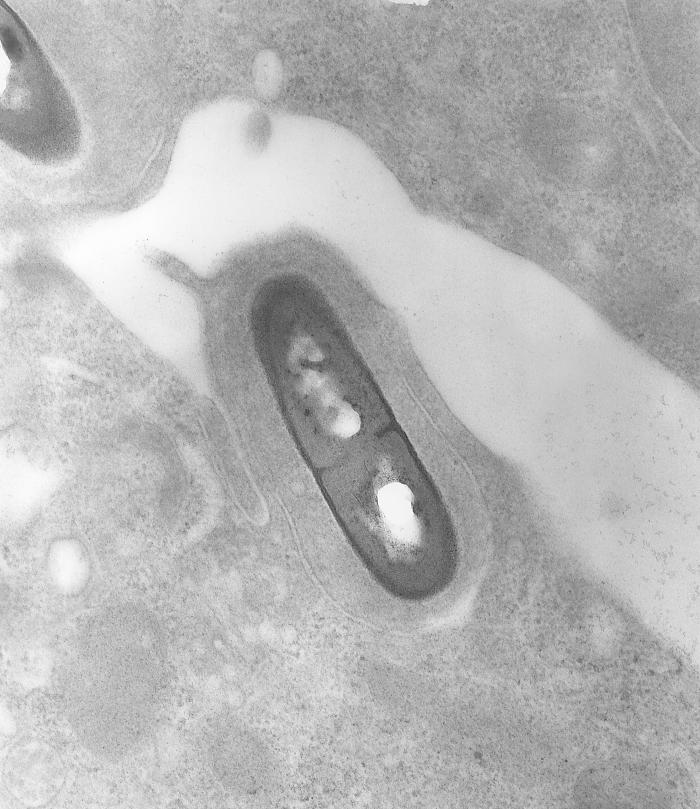
You have probably come across news of the potential Escherichia coli (E. coli) contamination in Chipotle restaurants or the Listeria outbreaks in the Blue Bell creameries this past year. For such harmful bacteria (see Figure 1) that cause diarrhea and distress for those who get sick after eating contaminated food, these two pathogens are surprisingly common in the environment. As you can see, the question of where a pathogen originates is a “chicken or the egg” type of situation. Were the bacteria growing happily and independently in the environment, or were they excreted from an animal into the environment and were still able to survive? While we may not know the answer, we do know that most cases of foodborne illnesses start from food that has been contaminated at some stage of the food production chain (see Figure 2).

These bacteria thrive in many different environments, ranging from soil, water, food-processing plants, to the mammalian (that’s you) gut. To emphasize how these bacteria are great survivors, let’s explore Listeria monocytogenes (L. monocytogenes), the causative agent of Listeriosis, a foodborne illness characterized by diarrhea, as well as fever and fatigue. L. monocytogenes, in particular, is able to withstand a range of temperatures including 37°C (i.e. normal human body temperature) to temperatures as low as -1.5°C, which is colder than your refrigerator! This capable microbe also exhibits acid tolerance (see Figure 3), which means it can survive in the digestive tract and colonize (establish an infection) in the intestines of humans, cattle, and fish.[1] These feats are not inclusive of all the survival strategies L. monocytogenes possesses, but emphasize how difficult it can be to discourage the growth of L. monocytogenes in our foods through typical control processes such as refrigeration. As a result, this sturdy microbe can easily be transmitted from contaminated soil to crops that end up on our dinner table without extensive preventative measures of control.

Who should we fear: generalists or specialists?
There are different categories for the types of pathogens that appear. Generalists are pathogens that are able to grow in many different environments, including animal hosts. These are often opportunistic, meaning they are typically happy in environmental locations such as soil, but if transmitted to a host, grow just as happily. Conversely, specialists grow in a particular environment or animal host. As you can see, the term “generalists” may better describe foodborne pathogens, as they have multiple strategies to survive in many different niches.[2] But what about the pathogens that do not cause disease outside of humans? Chlamydia trachomatis (C. trachomatis), the leading bacterial sexually transmitted infection in the world, is an obligate intracellular human pathogen which means it cannot grow nor replicate without entering human cells. C. trachomatis is isolated only in humans, which is very different from the generalist L. monocytogenes, and therefore, C. trachomatis is considered a “specialist.”
While it remains unclear where specialists originate, it is possible that these specialists were once generalists. For instance, all bacteria rely on the molecule adenosine triphosphate (or ATP) for energy. C. trachomatis, however, no longer produces ATP; instead, the bacterium steals ATP that is produced by our cells. C. trachomatis had undergone a phenomenon called genome reduction, in which genes not essential for survival are lost over time. In fact, the C. trachomatis genome (total DNA, or the “instructions” of the bacteria), is only about one megabase pair in size—that’s three times smaller than the average genome of E. coli—indicating that C. trachomatis has lost genes for the production of nutrients in addition to ATP, which is available in the host. In almost all cases, bacteria that do not rely on a host would not lose the genes that tell them how to make the protein that synthesizes ATP. However, C. trachomatis is an exception because it has learned to take advantage of its frequent infection of human cells and save itself the effort of making ATP by utilizing our ATP instead. [3] Thus, it is possible that generalists that repeatedly and successfully colonize a host may evolve into specialists by genome reduction and other phenomena.

In the case of chlamydia, a microbe specialized in a manner that was detrimental to humans. However, this is not always the case when specialization occurs. Bats are another great illustration of the potential evolution of specialized relationships. These ancient creatures have been around for a long time and also accumulated a vast array of viruses in their bodies. These viruses do not cause disease in the bats, but when the viruses are transmitted to other animals such as cattle and humans (zoonotic disease, see Figure 4), the viruses are fatal. The current thought is that bats were once susceptible to disease by the earlier forms of these viruses, but over time, the viruses specialized to such a high degree that they were no longer pathogenic. Rather, they began to form a commensal symbiotic relationship, or one in which the virus benefits by thriving in the bat, but the bat receives neither beneficial nor harmful effects from the viral growth. [4]
So, who should we fear? The answer is complicated, as both generalist and specialist microbes can be beneficial or harmful. Within our lifetime, it would be unrealistic to wait for harmful pathogens to evolve to work symbiotically with our bodies instead of against us. Instead, we can improve our understanding of how pathogens emerge and use that information to develop methods to lessen the emergence of dangerous novel pathogens. Even though microbes are very small in size, they can have an enormous impact on us and the environment.
References
[1] Listeria | FoodSafety.gov [cited 3/6/2016 2016]. Available from http://www.foodsafety.gov/poisoning/causes/bacteriaviruses/listeria/ (accessed 3/6/2016).
[2] Listeria guidelines – 3. growth characteristics [cited 3/6/2016 2016]. Available from http://www.foodsafety.govt.nz/elibrary/industry/guidelines-management-fish-listeria/lsteria4.htm (accessed 3/6/2016).
[3] Engleberg, N. C., T. Dermody, and V. DiRita. 2013. Chlamydiae: Genital, ocular, and respiratory pathogens. In Schaechter’s mechanisms of microbial disease. 5th ed., 292. Baltimore, MD: LIppincott Williams & Wilkins.
[4] Smith, I., and L. F. Wang. 2013. Bats and their virome: An important source of emerging viruses capable of infecting humans Current Opinion in Virology 3 (1) (Feb): 84-91.
[5] Toft, C., and S. G. Andersson. 2010. Evolutionary microbial genomics: Insights into bacterial host adaptation Nature Reviews.Genetics 11 (7) (Jul): 465-75.