
Authored by Lauren Alteio | April 16, 2016
It may be creepy to think about the seemingly invisible creatures lurking on nearly every surface, but understanding what these entities are is important for treating and preventing infections and illnesses. These critters are known as bacteria and viruses, which cause different illnesses that must be dealt with in specific ways based on their basic biology.
In order to properly treat diseases caused by microscopic bacteria and viruses, we must understand them at the most fundamental biological level. So, what makes a bacterium different from a virus? These entities may seem similar because they are small and are often associated with feeling sick (although the majority of bacteria are actually beneficial), but they have less in common than you might think. For starters, when we look at bacteria and viruses using microscopes, they are very different sizes. On average, bacteria have been measured to be about 0.5 to 5 micrometers in length, or about the size of a single clay particle, and can still be seen with a basic microscope [2,3]. Viruses are on average about 0.4 micrometers in size, about 5 times smaller than a bacterium, and therefore cannot be seen except when using specialized electron microscopes [3].

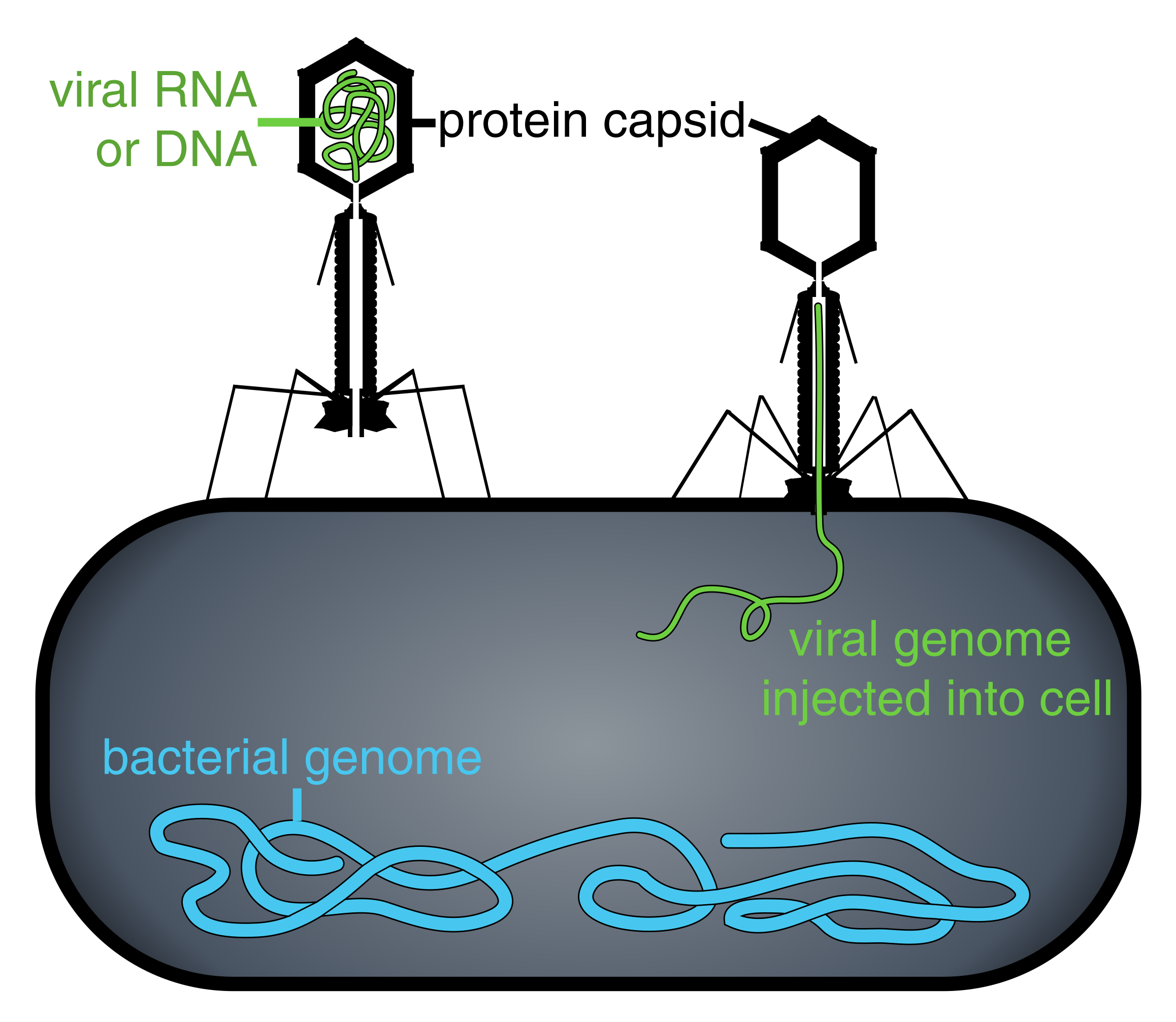
Beyond size, bacteria are also more structurally complex than viruses. Bacteria contain a cell wall and cell membrane, and genetic material in the form of DNA, which is floating in a jelly-like substance called cytoplasm. Bacteria also have ribosomes, which are important structures for making proteins. Some bacteria also have flagella, whip-like structures similar to a tail, which enable them to “swim” away from predators and to go after food. On the other hand, most viruses just consist of a protein shell called a capsid which surrounds their genetic material.


So far, I have carefully avoided the use of the word “organism” in this article. That is because “organism” implies that the creature is living based on the seven qualifications of life that are taught in many college-level biology lectures [3]. To be considered living, organisms must (1) be made of cell(s), (2) be structurally complex and organized, (3) use energy, (4) respond to environmental stimuli, (5) be able to grow, (6) reproduce, and (7) adapt to changes in their environment [4]. Bacteria are single-celled, and these cells have complex structures, including the cell wall, cell membrane, and ribosomes. They uptake food from their environment for energy, or make their own through photosynthesis. Bacteria respond to their environment by traveling to areas with high concentrations of food through a process called chemotaxis, and by altering their gene expression depending on environmental cues [5].
In contrast, viruses are much simpler in structure than bacteria, and are not made of cells. They also do not carry out metabolic activities, do not have the ability to respond to their environment, and do not grow, although viruses do seem to adapt to changes in their environment, resulting in antiviral resistance [6]. However, due to their simple structure, viruses do not contain any of the cellular machinery that is necessary for copying their own genetic material in order to produce more viruses. Instead, viruses must hijack the machinery of living cells in order to replicate themselves [7].
Bacteria and viruses also infect organisms through different mechanisms. Bacteria can infect organisms and tissues by sticking to the surface of other cells using small structures called pilli [8]. Some bacteria, like the organism that causes tuberculosis, form biofilms. These sugar polymers allow bacteria to stick to surfaces and resist environmental stress, including antibiotics [9], making them more difficult to treat. Viruses infect their hosts by injecting their genetic material into cells when the come in contact. The viral DNA or RNA can then be copied by the cell in order to make new viruses, which burst out of the cell and go on to infect other cells [7]. Infection by pathogenic bacteria or viruses both result in an immune response in the body, and can leave you feeling under the weather.


.jpg)
Bacteria, which cause infections such as strep throat and meningitis, are best combated using antibiotics. Antibiotics work by disrupting the process of cell wall assembly, specifically by breaking the bonds in the peptidoglycan polymer that makes up their cell walls [10]. Viruses, which cause the common cold and the flu, are more difficult to treat because antibiotics are not effective on them because they lack cell walls containing peptidoglycan. However, antiviral medications and vaccines have been developed in order to treat and prevent viral infection [11]. Antivirals work by targeting the structure of viral enzymes, which help them to enter host cells [12].
Like bacteria with antibiotics, viruses can become resistant to antiviral medications through the accumulation of genetic mutations [11,12]. This can happen through errors in copying the DNA during replication or spontaneous damage to the DNA, because viruses lack the proofreading abilities that cells have. The incredibly rapid rate of genetic mutation makes viruses a hard target to treat, so medical researchers are often in an arms race with quickly changing viral strains. Understanding the basic differences between viruses and bacteria helps doctors to make the right decisions in how to treat patients. Next time you are feeling ill, think twice about which microbe might be lurking behind your symptoms, or you might be doing more harm than good with the treatment you chose.
References:
1. Agapakis, C. (2013). “Some Uses of Bacteria”. Scientific American. https://blogs.scientificamerican.com/oscillator/some-uses-of-bacteria/.
2. Marshall, W.F. et al. (2012). What determines cell size? BMC Biology. http://bmcbiol.biomedcentral.com/articles/10.1186/1741-7007-10-101.
3. Interactive Scale of the Universe Visual Tool. http://scaleofuniverse.com/.
4. The 7 Characteristics of Life. https://infohost.nmt.edu/~klathrop/7characterisitcs_of_life.htm.
5. Bren, A., and Eisenbach, M. How signals are heard during bacterial chemotaxis: Protein-Protein interactions in sensory signal propagation. (2000). Journal of Bacteriology, 182(24):6865-6873. http://jb.asm.org/content/182/24/6865.full.
6. Sanjuán, R., and Domingo-Calap, P. Mechanisms of viral mutation. (2016). Cellular and Molecular Life Sciences, 73:4433-4448. https://link.springer.com/article/10.1007/s00018-016-2299-6.
7. Introduction to the Viruses. University of California Museum of Paleontology. http://www.ucmp.berkeley.edu/alllife/virus.html.
8. Ribet, D. and Cossart, P. (2015). How bacterial pathogens colonize their hosts and invade deeper tissues. Microbes and Infection, 17(3):173-183. http://www.sciencedirect.com/science/article/pii/S1286457915000179.
9. Kulka, K., Hatfull, G., and Ojha, A.K. Growth of Mycobacterium tuberculosis biofilms. (2012). J. Vis. Exp., 60:3820. https://www.ncbi.nlm.nih.gov/pubmed/22371116.
10. Reynolds, P.E. Structure, Biochemistry, and Mechanism of Action of Glycopeptide Antibiotics. (1989). Eur. J. Clin. Microbiol. Infect. Dis., 8(11):943-950. https://link.springer.com/article/10.1007/BF01967563.
11. Ventola, C.L. The Antibiotic Resistance Crisis. (2015). Pharmacy and Therapeutics. 40(4):277-283. https://www.ncbi.nlm.nih.gov/pmc/articles/PMC4378521/.
12. Kimberlin, D.W., and Whitley, R.J. (1996). Antiviral resistance: mechanisms clinical significance and future implications. Journal of Antimicrobial Chemotherapy. 37;403-421. https://www.ncbi.nlm.nih.gov/pubmed/9182098.